

Scientific language can seem difficult at first, especially when many terms sound unfamiliar or highly technical. However, once you look at where these words come from, they often become much easier to understand and remember.
Many of these terms are rooted in Greek, Latin, or other languages, and their histories can reveal how people once described the natural world, the human body, and discoveries. That is part of what makes words with surprising scientific origins so interesting.
By learning the stories behind these terms, readers can build vocabulary, improve recall, and gain a deeper appreciation for how science and language have developed together over time.
What are the Science Words with Surprising Origins?
Science terms often seem complex because they are built from older word parts that are not used much in everyday English. Still, many of them become clearer when you break them down and look at their origins. Here are some fun terms worth noting:
- Schist
Schist is a metamorphic rock that tends to split into thin layers. Its name comes from French and Latin, via Greek schistós, meaning “split” or “divided.”
Geology, apparently, believes in naming things with brutal honesty. Once you know the root, the rock’s structure makes perfect sense because schist is literally the “split” rock.
- Chemistry
Chemistry is the science of substances and how they change, but its word history is quite messy to trace. English got it through forms related to alchemy, and the deeper root is still debated.
Some sources trace it back to the older alchemical tradition, while others note that the root of chem remains uncertain. So yes, even the word for a precision science comes with an unresolved backstory.

- Kwashiorkor
Kwashiorkor is a severe form of malnutrition, especially associated with protein deficiency. The word came from the Ga language of Ghana and is commonly glossed as “the sickness the baby gets when the new baby comes,” referring to a weaned child when a younger sibling is born.
- Ologies
Ologies is the playful plural of ology, meaning a branch of knowledge or science. It’s one of many Science words with surprising origins, tracing back to words like geology and psychology.
That ending comes from the Greek word logos, which is tied to speech, account, or discourse. So when people joke about “all the ologies,” they are really joking about all the structured fields humans created to talk about the world in organized ways.
- Ba humbugi
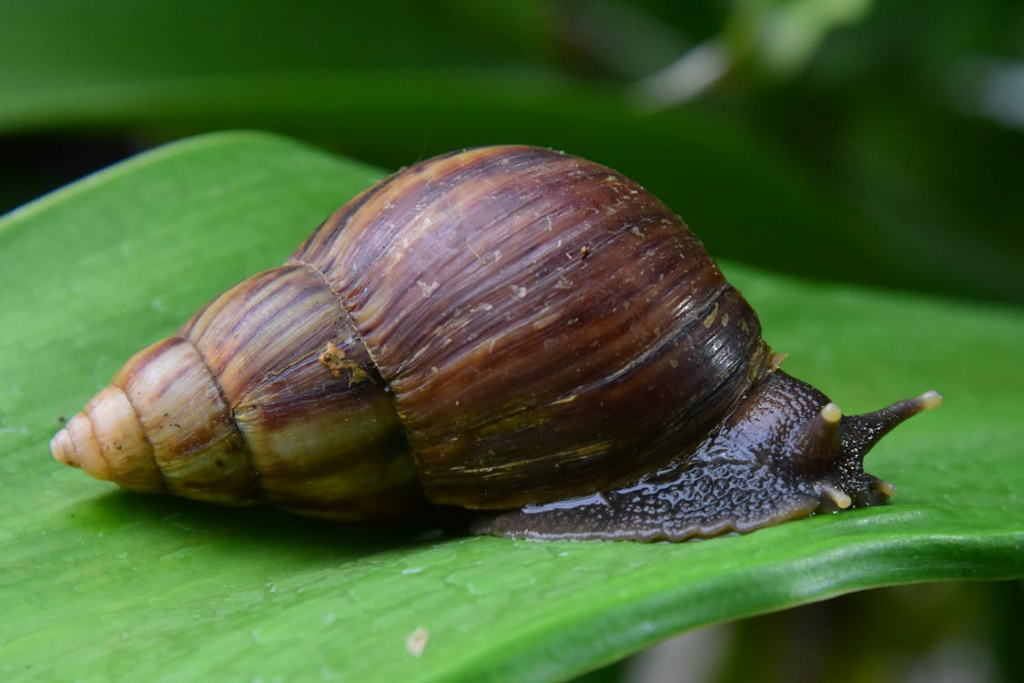
Ba humbugi is not a joke someone made on social media. It is a real species name for a Fijian land snail. The genus Ba refers to Fiji’s Ba District, and the species name humbugi was chosen as a nod to Scrooge’s “Bah! Humbug!” from A Christmas Carol.
Taxonomy is a serious science, but now and then it lets a little holiday chaos in.
- Magnetopause
The magnetopause is the outer boundary of a magnetosphere, where a planet’s magnetic field meets surrounding solar wind plasma. The word is built directly from magneto and pause, and the dictionary records its first use in the mid-20th century.
It is a modern scientific compound, but it still feels dramatic. It sounds like space itself is pressing pause at the edge of a planet’s protective magnetic bubble.
- Orogenies
Orogenies are mountain-building events, the large geological processes that create ranges like the Alps or Himalayas.
The singular “orogeny” comes through French and is related to forms meaning “mountain formation.” At the same time, related scientific references connect it to Greek oros for “mountain” and genesis for “origin” or “creation.” In other words, the word literally points to the birth of mountains.
- Pasteurization
Pasteurization is the heat treatment used to reduce harmful microbes in foods and drinks. It is named after Louis Pasteur, whose 19th-century work showed that heating could prevent spoilage and abnormal fermentation.
This makes it an eponym, a word formed from a person’s name. Unlike many older scientific terms from Greek or Latin, this one is refreshingly straightforward. It honors the scientist whose research changed food safety.
- Otorhinolaryngologist
An otorhinolaryngologist is an ear, nose, and throat specialist. The word looks like it swallowed a dictionary, but it is just a stack of parts: oto- for ear, rhin- for nose, laryng- for larynx or throat area, plus -logy and -gist.
- Parallax
Parallax is the apparent shift in an object’s position when viewed from different angles, a key idea in astronomy and optics. Its root comes from Greek parallaxis, meaning “change.” That is beautifully efficient.
The word does not just name the concept. It summarizes it. If your viewpoint changes and the object seems to move, you are seeing a “change,” which is exactly what the ancient root promised.
- Catacoustics
Catacoustics is an older term for the study of reflected sound, basically the science behind echoes. The OED traces it as an English formation built from cata- and acoustics. It is one of those science words that sound far more mysterious than their job descriptions.
- Petrichor
Petrichor is the earthy smell that rises when rain hits dry ground. The word was coined in 1964 by scientists Isabel Joy Bear and Richard Grenfell Thomas.
It combines Greek petra, meaning “stone,” with ichor, the mythological fluid said to flow in the veins of the gods.
- Borborygmus
Borborygmus means the rumbling sound made by gas moving through the intestines. Some experts trace it to Greek borboryzein, meaning “to rumble,” and note that the Greek form was likely onomatopoeic.
The word itself imitates the noise. So your digestive system has a technical label, and that label is basically a classical-language sound effect.
- Ittibitium
This scientific term refers to a genus of very small sea snails. The official taxonomic literature explains the name as a compound using “itti,” an American vernacular prefix meaning “very small,” paired with Bittium, a related snail genus.
In short, scientists effectively named it “itty-bitty Bittium.” That is adorable, accurate, and unusually transparent for taxonomy.
- Zoosemiotics
Zoosemiotics is the study of signs and meaning in animal life, including animal communication. Thomas A. Sebeok introduced the term in 1963, combining zoo- with semiotics. That makes the term almost self-translating: the study of signs among animals.
- Acetabulum
The acetabulum is the cup-shaped socket of the hip bone that receives the head of the femur. Its name comes from Latin acetābulum, meaning a small cup originally used for vinegar. Roman anatomists saw the resemblance and named the body part after tableware.
- Peristalsis
Peristalsis is the wave-like muscular motion that moves food through the digestive tract. The word comes from New Latin and Greek forms related to peristaltikos, with roots meaning “wrapping” or “constricting”.
- Abyssal
Abyssal usually refers to the deepest parts of the ocean. Some sources trace it to the Latin abyssus and the Greek abyssos, meaning “bottomless.”
That root is wonderfully dramatic and only slightly rude to the ocean floor, which is, in fact, not bottomless. Still, as descriptive language goes, “abyssal” does a great job of making deep-sea science sound appropriately eerie.
- Krypton
Krypton is a noble gas discovered in 1898 by William Ramsay and Morris Travers. The name comes from Greek kryptos, meaning “hidden.” That is fitting because krypton exists only in trace amounts in Earth’s atmosphere and was difficult to isolate. So no, the element was not named after Superman’s planet. Comic-book Krypton came later and borrowed the cool factor.
- Atom
Atom comes from the Greek atomos, meaning “indivisible.” Ancient thinkers used it to refer to a particle they believed could not be divided into anything smaller.
Modern physics later showed that atoms are divisible after all, which gives the word a fun historical twist. The name survived even after the original assumption failed. Science kept the ancient label and updated the underlying science.

- Ostracods
Ostracods are tiny crustaceans, many of them enclosed in a shell-like covering. Their name goes back to the Greek term ostrakon, meaning “potsherd” or shell.
That root shows up because its hard casing reminded people of small pieces of pottery. It is a great example of early scientific naming by visual analogy. If it looks like a shard, someone will eventually name it after a shard.
Where Can You Discover More Science Words with Surprising Origins?
1. Language Learning Platforms and Apps
If you want to remember unusual scientific vocabulary, apps can help by turning repetition into a habit rather than a chore. Lingowar presents vocabulary through game-like practice, which can make recall easier, especially when a term is strange enough to stick in your brain once you meet it twice.

For learners chasing science words with surprising origins, that kind of repetition matters. The best routine is to learn the word in an app, then verify the history in a dictionary.
2. Online Dictionaries
Online dictionaries are useful when you want to understand both the meaning of a science term and the story behind it.
A good dictionary can help you break down prefixes, suffixes, and root words, which makes technical vocabulary easier to learn. It’s especially helpful for science terms derived from Greek, Latin, or older scientific naming conventions.
Looking up etymology alongside the definition also helps readers remember unfamiliar words more easily.
3. Reading Textbooks
Textbooks are useful because they explain scientific terms in a structured and consistent way. Instead of giving only a short definition, they place vocabulary inside a larger lesson, which makes the meaning clearer.
This can be especially helpful for readers who want to understand not only what a term means, but also how it is used within a field of study. Textbooks also tend to repeat important terminology, which supports long-term retention.
Final Thoughts
Science vocabulary is a lot less intimidating once you realize many terms are built from everyday images, old languages, personal names, and the occasional excellent joke. If you enjoyed this list, keep the momentum going and explore more word-focused posts on the Lingowar blog.

![15 Daily Vocabulary Habits to Improve Your English Skills [Tips]](https://lingowar.com/blog/wp-content/uploads/2025/07/2.jpg)