Vocabulary can feel boring when it consists only of lists and quizzes. Children and adolescents already have packed days, so they will not stay engaged with routine drills.
In this guide, you get practical, fun, and repeatable ideas that actually help them remember and use new words.
You will see simple classroom tweaks, easy home activities, and innovative digital tools that turn vocabulary activities for kids into something they look forward to rather than avoid.
What are Fun Vocabulary Activities for Kids and Teens?
Fun vocabulary work does not mean random games with no learning goal. It refers to activities that provide repeated exposure to words, encourage active use, and connect new vocabulary to real-life contexts.
Effective vocabulary activities for children integrate reading, speaking, writing, and movement, thereby exposing learners to the same words in different modalities. These approaches improve motivation and vocabulary retention compared with traditional rote memorization.
Below are nine specific activities you can use at home or in class. Each is suitable for different ages and skill levels.
Interactive Word Journals
Interactive word journals move learners beyond copying definitions. Students record new words, add examples, and revisit them often. Classroom studies show that vocabulary journals help students learn the meanings of key terms and perform better on post-tests when they combine context, explicit instruction, and review.
Teachers who use “interactive vocabulary notebooks” also report better organization, engagement, and deeper word learning.
You can structure this form of vocabulary activities for kids in a simple way:
- One page per word with space for definition, sentence, picture, and word family
- A “personal word wall” section where students add words they meet in their own reading
- Regular check-ins where they choose a few words and use them in short stories or dialogues
Personalized definition pages give students ownership. Instead of a generic sentence, ask them to write examples tied to their life, such as school, hobbies, or favorite shows.
You can also add quick challenges at the end of each week, like “Use three journal words in one funny paragraph.” This keeps the journal active rather than treating it as a one-time task.
Word Mapping and Visual Organizers
Word maps and graphic organizers help students see how words connect to meanings, synonyms, antonyms, and real situations. Semantic maps are visual webs that link a central word to related concepts.
They help struggling readers and learners with disabilities understand and recall word meanings more effectively.
You can turn these tools into vocabulary activities for kids by giving them organizers such as:
- Mind maps with the target word in the center and branches for definition, example, non-example, synonym, and antonym
- Concept maps that connect school topics, such as “ecosystems” or “fractions,” with precise vocabulary
- Simple charts where learners group words by meaning, tone, or part of speech
Have students create the map themselves rather than completing a worksheet. Ask them to add images, colors, or small doodles. The act of constructing the map prompts them to consider the word from multiple perspectives, thereby strengthening long-term recall.
Vocabulary Scavenger Hunts
Reading specialists describe vocabulary scavenger hunts as a way for students to “hunt” for target words in books, websites, labels, and daily life, which encourages them to notice vocabulary in context.
Printable scavenger hunts are also used with younger children to build vocabulary, observation, and early thinking skills through themed exploration.
You can set up this activity through:
- Provide a list of target words or categories, and ask students to find real examples in signs, menus, articles, or packaging.
- Use clue cards that describe a word without naming it, and ask learners to match the clue to an object or text in the environment.
- Have students take photos or brief notes of where they found each word, then share them with the group.
Conclude the activity with a brief discussion in which students explain each finding in a complete sentence. It bridges the gap between spotting a word and using it correctly.
Word Games and Puzzles
Crosswords, word searches, and similar puzzles give repetition in a format students enjoy. In fact, studies on crossword puzzles in language learning indicate that these games can improve vocabulary mastery and make lessons feel more engaging, specifically for younger learners.
You can turn traditional games into powerful vocabulary activities for kids with a few tweaks:
- Create crosswords that use curriculum vocabulary instead of random words.
- Design word searches in which students must also write a sentence using each found word.
- Use fill-in-the-blank puzzles in which students select the correct word from context clues.
Keep puzzles short so they feel manageable. Rotate between different formats so students do not treat them as predictable worksheets. Please encourage them to work in pairs so they must talk about the words as they solve.
Story Builders
Story-based activities help children and teens encounter words in meaningful contexts rather than in isolation. These stories introduce new vocabulary and complex sentence structures in ways that are easier to remember.
Frequent exposure to stories is linked to stronger vocabulary, better comprehension, and more sophisticated language use. Here’s how you can shape vocabulary activities into collaborative “story builder” games:
- Assign each learner or pair a set of target words and ask them to build a short narrative that uses all of them.
- Have groups pass a story around, with each student adding one or two sentences that must include their assigned word.
- Please encourage them to highlight the vocabulary words and read the final stories aloud.
The goal is to demonstrate to students that new words are tools they can use to express ideas, humor, and emotions. Stories provide practice with sentence-level vocabulary, supporting both writing and speaking.
Role Play & Charades with Vocabulary Words
Role play and charades connect language with physical movement and emotion. These activities help students participate actively and support vocabulary acquisition by combining fun with repeated exposure.
Learners remember words better when they associate them with actions and personal experiences rather than just written definitions.
You can build vocabulary activities for kids around role play like this:
- Give each student a card containing a target word, and ask them to act it out while others guess.
- Set up short role-plays in which students must use specific vocabulary, such as feeling words, scientific terms, or academic verbs.
- Allow props or simple costumes to enhance the scene’s memorability.
After each round, ask learners to provide a complete sentence using the word and explain its meaning. This reinforces both receptive and productive knowledge.
Digital Word Games & Apps
Digital tools are a natural fit for many kids and teens. Research on digital game-based language learning shows that well-designed games can enhance vocabulary acquisition and motivation by combining challenge, feedback, and repetition.
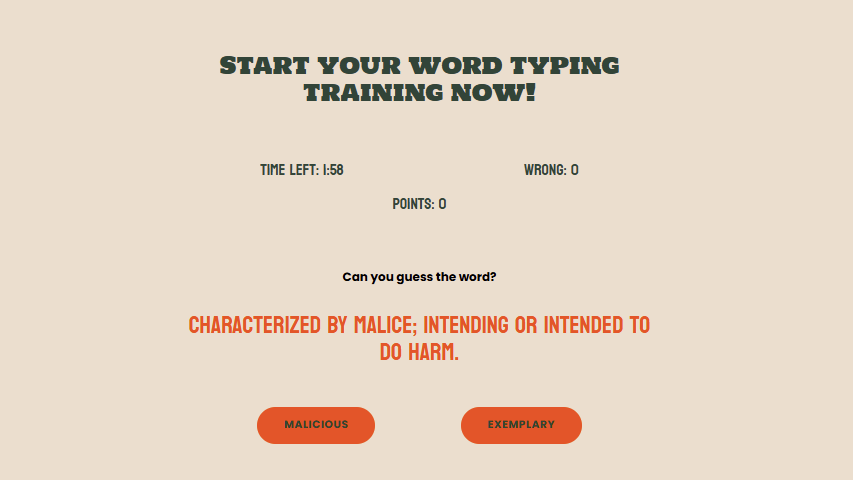
You can turn screen time into vocabulary activities for kids by choosing focused word games. One option is Lingowar, a free online vocabulary game in which learners match words to definitions or synonyms under time pressure. The format is simple:
- Definitions and clues appear on the screen
- Players select or type the correct word as quickly as possible
- Scores reflect both accuracy and speed, which appeals to competitive learners
This style of game is well-suited for visual, competitive, and digital-native learners because it provides short, intense practice sessions. For best results, pair digital games with a quick reflection task such as “Write three new words you met today and use each in a sentence.”
Daily Word Challenges
Small, daily challenges can be just as powerful as big projects. Platforms such as Vocabulary.com are based on the premise that frequent, bite-sized practice with words, along with games and quizzes, expands vocabulary over time.
Consistency is more important than occasional long sessions, especially for younger learners with limited attention spans. You can design vocabulary activities around a “word of the day” routine:
- Introduce one new word, say it aloud, and give a student-friendly definition.
- Ask learners to complete quick prompts, such as “use it in a question” or “use it to describe your day.”
- Track progress with a simple chart or sticker system to reward participation.
Over weeks and months, this habit can build a large bank of usable words. You can also let students nominate words they want to add, which increases ownership and curiosity.
Why Fun Matters in Vocabulary Learning
Fun is not a distraction from learning. It is one of the engines that drives attention and repetition. Games increase engagement, reduce anxiety, and help students retain new vocabulary better than traditional drills alone.
When learners feel relaxed and curious, they are more likely to take risks, ask questions, and try new words in speech and writing.
Designing vocabulary activities for kids around play has several benefits:
- It multiplies the number of times they meet a word in different contexts
- It motivates them to practice longer without feeling forced
- It supports collaboration and conversation, which deepen understanding.
The goal is not constant entertainment. The goal is a sustainable learning environment in which vocabulary practice is challenging in a positive rather than punitive, way.
How to Choose the Right Activity for Your Child or Teen
Not every activity suits every learner. Age, interests, and learning goals all matter. Use the ideas below to match vocabulary activities for children and adolescents to their needs rather than imposing a single method on everyone.
1. Consider Age and Language Level
Younger children require more concrete, visual, and movement-based tasks, whereas adolescents can handle abstract concepts and sophisticated texts. Early learners benefit from pictures, stories, and games, while older learners gain from academic word lists and structured reading.
When matching vocabulary activities for kids to age and level, think about:
- Can the learner read the instructions independently
- Do they still need strong visual and physical support
- Are the words tied to classroom content or daily life
Choosing activities that are just challenging enough keeps learners in the “sweet spot” where they stretch but do not shut down.
2. Match the Activity to Learning Style and Interests
Some kids love drawing. Others prefer talking, moving, or using devices. While learning styles are not strict categories, preferences still affect motivation. When students feel activities reflect their interests, they participate more and persist longer with complex tasks.
To align vocabulary activities with preferences, you can:
- Offer options such as “draw it,” “act it,” or “type it” for the exact target words
- Connect words to topics they love, like sports, gaming, animals, or music
- Use digital games for tech-loving learners and story work for those who enjoy reading
3. Balance Digital and Offline Practice
Screens can boost learning when used intentionally, but they should not replace all other methods. Digital flashcards and vocabulary apps are often more effective than paper flashcards alone because they provide instant feedback and support spaced repetition.
At the same time, handwriting, drawing, and in-person conversation build different memory pathways.
When planning vocabulary activities for kids, try to:
- Use digital tools like Lingowar or other apps for fast-paced review and motivation
- Pair them with analog tasks such as journals, word maps, or role plays
- Set clear time limits for screen-based work to protect focus and well-being
4. Align Activities with Real Goals and Assess Progress
It is easy to collect appealing ideas without considering the long-term impact. Clear goals and simple checks keep vocabulary work meaningful.
For example, a child should understand science terms in their textbook, prepare for a test, or feel more confident speaking in class. Formative assessments, such as quick quizzes, oral checks, or writing tasks, help you determine whether activities are practical.
To make vocabulary activities for kids goal-focused, you can:
- Choose a small set of priority words each week that connect to schoolwork or personal interests
- Track which activities lead to the correct use of those words in speech or writing
- Adjust the mix of games, journals, and reading if progress slows.
This approach respects the learner’s time and energy and shows them that their effort leads to visible growth.
Final Thoughts
Vocabulary growth does not have to rely on long lists and stressful tests. Interactive journals, visual maps, scavenger hunts, puzzles, stories, role-plays, and digital games can all turn word learning into an active part of a child or adolescent’s day.
The key is to select a mix of methods, repeat target words in different formats, and link activities to real goals such as improved reading, clearer writing, and more confident speaking.
![15 Daily Vocabulary Habits to Improve Your English Skills [Tips]](https://lingowar.com/blog/wp-content/uploads/2025/07/2.jpg)